2015 - A Look into the Future
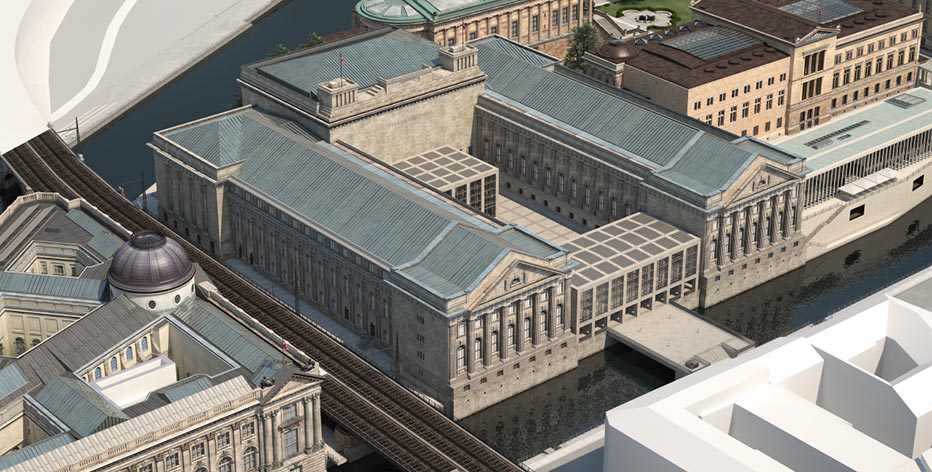
The Museumsinsel (Museum Island), considered as a unique ensemble of an educational landscape, represents 100 years of museum architecture in the middle of Berlin. The reunification of Germany opened up the historically unique opportunity to reunite the collections which had been divided between East and West. In 1999 UNESCO placed Museumsinsel under its protection as a "World Cultural Heritage" site.
The foundation council of the Stiftung Preußischer Kulturbesitz (Prussian Cultural Heritage Foundation) had adopted a master plan for renovation of the buildings and modern development of the entire museum area in 1999. The master plan was included in the application for the distinctive classification by UNESCO. It treats the five historic buildings as a single unit while respecting their architectural autonomy. Responsibility for implementing the idea behind the master plan was assumed by the Museumsinsel planning group formed in 1998, which consists of the architecture offices commissioned with renovating the buildings and was chaired by David Chipperfield Architects.
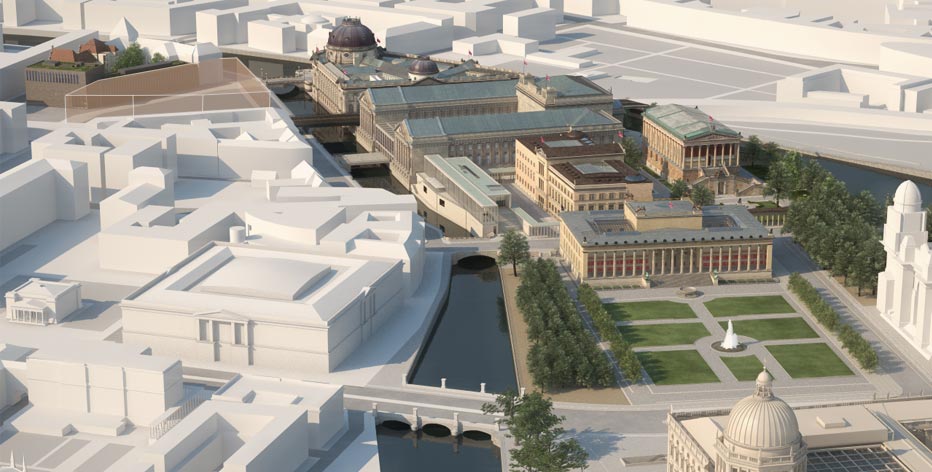
The Museumsinsel is situated on the northern part of an island in the centre of Berlin in the River Spree and has an area of almost one square kilometre. On this island, over 600,000 years of human history are presented in a temple city of art and culture. The archaeological museums will be connected with one another at their base level both spatially and thematically by the Archaeological Promenade. This is the contextual bond which will present the cultures of the ancient occidental world in an overall, interdisciplinary display. In a main circuit in the Pergamon Museum the large streams of visitors will be presented the major exhibits of the Berlin Museums, i.e. the monumental architecture of the old world. At the same time, these exhibits each continue to be connected spatially with the associated collections. Each building, which also has its own entrance, offers individual visitors a direct, undisturbed, intensive encounter with its collections.
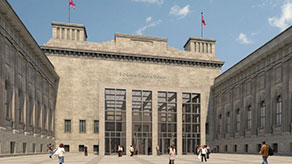
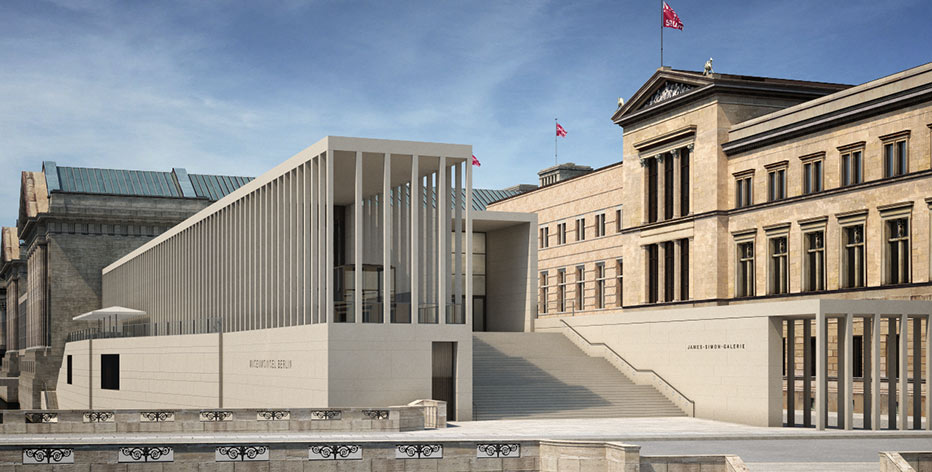
The newly constructed James Simon-Galerie between the Neues Museum (New Museum) and Kupfergraben ("copper ditch", the western arm of the Spree) will welcome visitors and distribute them over the museum part of the island. It will be the main entrance to the individual museums as well as to the main circuit and will provide central service functions for the entire island such as a café, a museum shop and an auditorium. Beyond that, it will also provide space for alternating presentations of the museums.
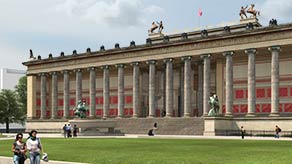
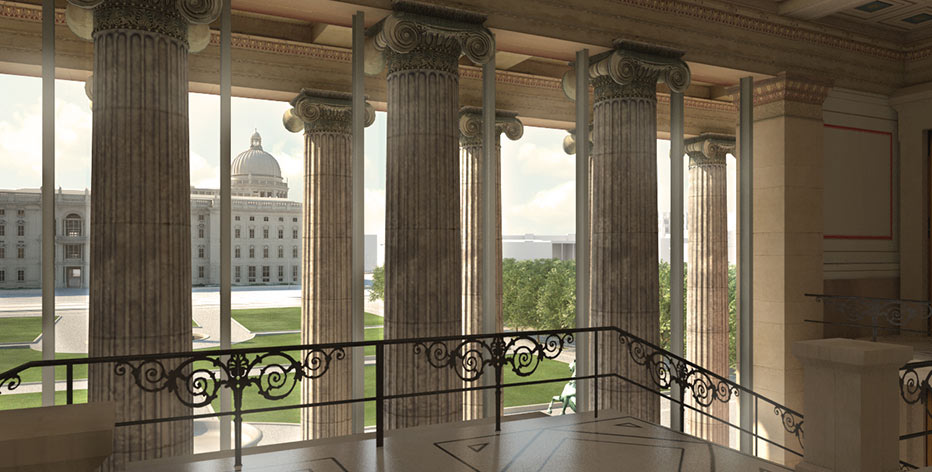
The colonnades around the Neues Museum and the Alte Nationalgalerie (Old National Gallery) have been restored. They will be extended to the James Simon-Galerie in modern form language. The open spaces are being redesigned and will be accessible to visitors as far as the courtyards of the Bode-Museum.
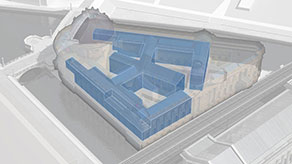
Technical administrations with libraries and archives, student repositories and restoration shops, etc. will be housed together in the new "Museumshöfe" ("museum courtyards") being constructed on the other side of the Kupfergraben so as to gain space for infrastructure and service facilities on the island.
This, in short, is the long term development concept for the future of the Museumsinsel ensemble.